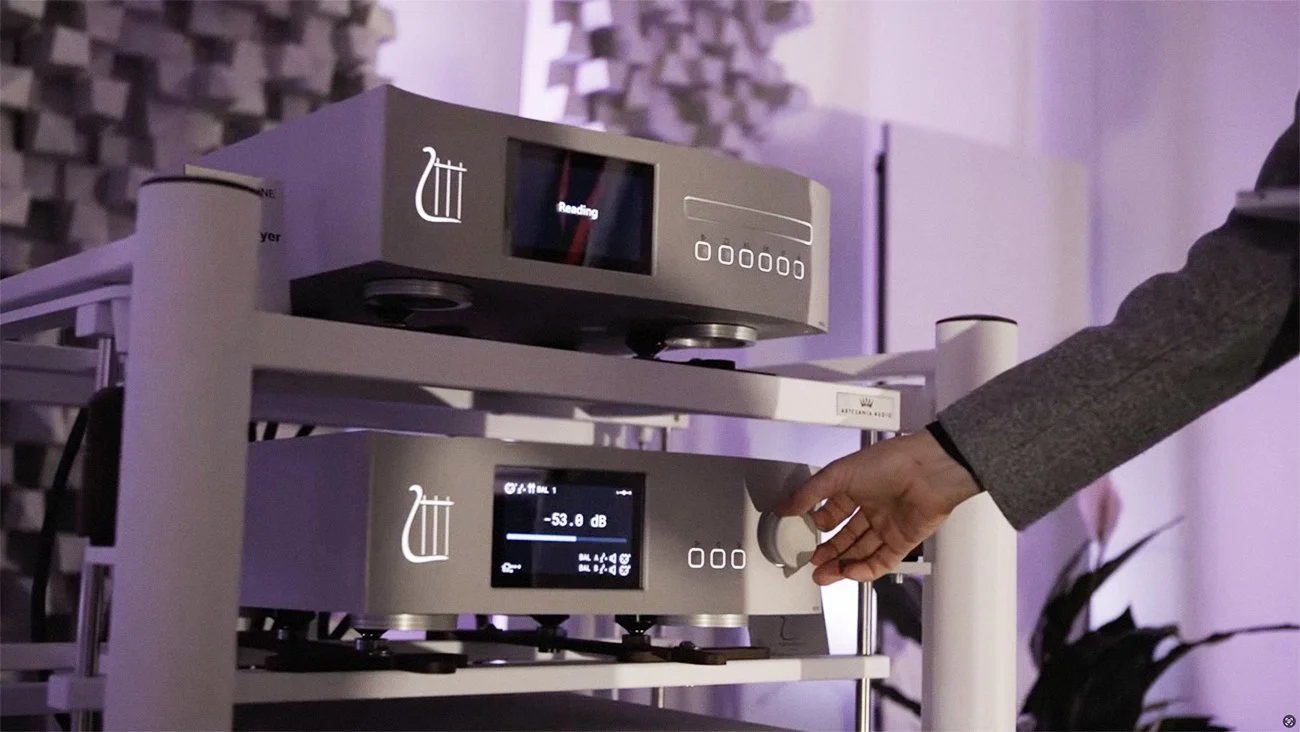

A FOUR I200 Integrated Amplifier
There are moments in this hobby when the system stops sounding like hi-fi and starts behaving like a living thing. The air thickens, instruments gain a body, and a full orchestra feels less like a recording and more like a presence that has quietly moved into the room.
That “physical” quality is where Orpheus Lab lives.
This Swiss manufacturer has long been admired for its digital components and the beautifully judged Revival Filter – a way of restoring musical flow without softening everything into syrup. Their amplifiers come from the same mindset: use serious engineering to serve texture, weight and humanity, not just numbers on a spec sheet.
Like it or not, most ultra high-end systems force you to pick one of two sides:
On one side you have the fast, ultra-revealing solid-state amplifiers – huge bandwidth, lightning transients, incredible control… but sometimes a bit lean or unforgiving.
On the other are the amps we call “musical”: tone for days, warmth, colour, texture – but not always the last word in grip, speed or silence.
Orpheus Lab set out to avoid that trade-off altogether.

H Three M800 Opus II Monoblock Amplifier
They're able to do this by combining some key ideas in novel ways:
1. Muscle and Brain in the Output Stage
Most designers pick a camp:
MOSFET output stages for that tube-like density and midrange glow, or Bipolar stages for speed, current and tight bass.
Not so for Orpheus. They simply use both!
The “muscle” comes from rows of hand-matched MOSFET power devices (up to 24 per channel in the Heritage line). They behave in a very tube-like way, giving that saturated, textured midband that people fall in love with.
The “brain” is a dedicated Bipolar control stage for each MOSFET. This reins in the bass and timing, so the sound doesn’t go soft or bloomy when things get complex.
The result in the listening chair is pretty simple to describe: you get the bloom and harmonic richness of a warm amp, but with the iron grip and transient snap of a serious, high-speed solid-state design. What's not to love?
2. Volume That Doesn’t Throw Away Music
Most volume controls are a necessary evil. At low levels, a lot of them flatten the dynamics or shave off resolution. Digital volume controls often do it by throwing away bits. Traditional pots can add noise and channel imbalance.
Orpheus’ CRQL volume system in the Heritage and Absolute preamps is a different animal. It’s a purely passive, resistor-based ladder – no semiconductors in the signal path – built from very tight-tolerance metal-film parts.
In practice, this means you can listen at whisper levels and still hear the same bandwidth, contrast and “black background” you get when you turn things up. Late-night listening suddenly stops feeling like a compromise.
3. Always Sitting in the Sweet Spot
Big Class AB amplifiers have a dirty little secret: as they warm up, their operating points drift. Bias changes, temperatures rise, and the sound can harden or flatten out over the course of a session.
Orpheus tackles that with a proprietary Polarization Circuit that constantly tracks transistor temperature and nudges the bias to keep the amp right in its sweet spot – whether it’s just switched on, fully hot, or driving a nasty speaker load.
The intention is straightforward: make sure that crucial first watt – the one you’re hearing most of the time – behaves like the best Class A you’ve ever heard, from the first track to the last.
4. Power Supplies That Feel Like a Foundation
A lot of modern Swiss designs have moved to very fast switching-mode power supplies. They’re clever, compact and efficient.
Orpheus goes the other way on purpose.
Their amplifiers use huge linear supplies with oversized toroidal transformers and vast capacitor banks (we’re talking well over 350,000µF in some models). On paper, this looks like “overkill”. In a system, it feels like the floor of a concert hall.
Where some switching supplies can sound quick but a little lightweight, the Orpheus approach gives the music physical weight and scale – that sensation that a full orchestra, or a big rock band, has actually moved into the room rather than just being sketched across the speakers.

A TWO 22D Preamplifier
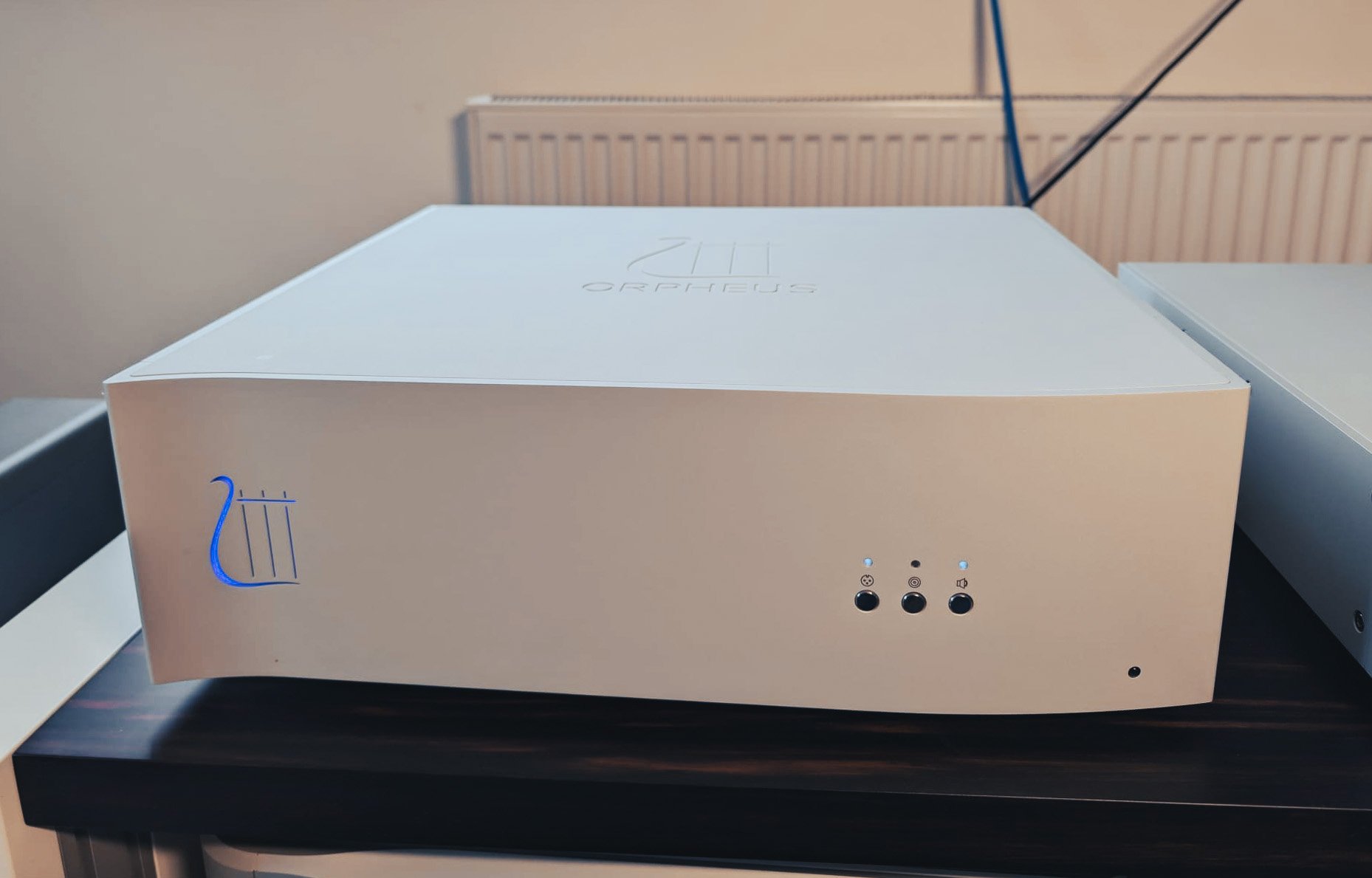
A THREE S200 Power Amplifier

Where Orpheus Lab Sits in the High-End Landscape
If you listen across the current high-end spectrum, you can sort things into four broad “schools”:
The “Spectral Speed” School
Very fast, airy, extended. The focus is on purity, bandwidth and transient speed – thrilling, but can lean toward the lean/analytical side if you’re not careful.The “Analytical” School
Hyper-transparent and crystalline. These designs give you a studio-window view into the recording, with forensic detail and structure. Fantastic if you want to study a mix; not always the most forgiving.The “Organic” School
Tube and MOSFET-heavy designs that glow, flow and embrace intimacy. They major on naturalness and emotional connection, sometimes at the expense of ultimate grip and scale.Orpheus Lab
Orpheus lands somewhere else: dense, fluid, and gripped. There’s meat on the bones, proper tone and weight, but also the black backgrounds and authority you expect from serious solid-state.
You don’t buy Orpheus to dissect a recording line by line. You buy it because you want instruments and voices to feel physically there – the body of a cello, the impact of a bass drum, the pressure wave of a full orchestra landing in the room.
If your priority is texture, presence and that slightly uncanny “is this still hi-fi or is this just…music now?” moment, Orpheus Lab sits very comfortably in that space.
Follow links below for full product details and technical specifications: